The “Pretty Food” (PiaoLiangFan 漂亮饭): Michelin discount or expressive fine dining ?
Decoding the new DNA of Gen Z consumption in China
Introduction
From Analysis to Offensive
This report is your strategic leverage. To explore these signals further, audit your position, or secure your operations on the ground, engage with our experts.
7.31 billion. That’s the cumulative number of views for the hashtag #漂亮饭 (“Pretty Food”) on Douyin (TikTok) from its launch until February 2026 in China. To put that into perspective: Roughly one view per human on Earth. One keyword. One platform. One country.
While a Michelin-starred restaurant remains a gastronomic event reserved for special occasions, 22-year-old Chinese people queue for ten hours in Shanghai to get into a Yunnan-Guizhou bistro. They resell their waiting tickets for up to 300 RMB / €40 . They’re not there for the food. They’re there for the show.
Welcome to the emotional value economy . Piaoliang Fan, literally “pretty food,” isn’t a culinary trend. It’s the food manifestation of a structural shift: China’s Generation Z (1995-2010) no longer pays for a product, they pay for proof. Proof of identity, proof of taste, proof of digital existence.
Since 2023 , China has been experiencing a deflationary climate and a wave of consumption downgrading . But Gen Z rejects the traditional trade-off. They accept lower prices. They refuse to compromise on brand identity. Pretty food addresses this tension perfectly: a mode of consumption that is expressive, affordable, and profitable , made possible by the industrialization of the supply chain.
And the phenomenon extends far beyond the restaurant industry. Pop Mart sells Labubu figurines with no functional purpose, generating 6.1 billion RMB / €800 million in annual revenue. Florasis sells lipsticks sculpted like jewelry, an expression of emotion rooted in Chinese aesthetics, for 5.4 billion RMB / €700 million in annual revenue. Coach generated 55% growth in China in Q1 2026 , reaching 2.9 billion RMB / $430 million in quarterly revenue, driven by consumers under 30, attracted by “expressive luxury.”
Michelin and Pretty Food are not competing. They operate according to two distinct principles. Michelin combines three factors in a premium experience (taste, quality, and emotional experience) at the price of excellence. Pretty Food is not a low-cost Michelin. It is fine dining reinvented for Gen Z : it fully preserves quality (sourcing, consistency, safety), adjusts the taste to a good-to-accept level, but multiplies the emotional experience to an unprecedented level relative to its accessible price.
Above all, these two models embody two mindsets. Michelin is top-down, centralized, and expert-driven. Piaoliang Fan is bottom-up, decentralized, and community-oriented. The latter reflects the mental framework of Chinese Gen Z: low deference to established authority, primacy of self-expression, and validation by peers.
Part 1: Birth of the Category. Gen Z Refuses to Sacrifice Its Identity for a Low Price.
Piaoliang Fan did not come from the sky. It is the product of a dual tension : saturation of supply, shift in Gen Z demand.
On the supply side, since 2015, the Chinese urban restaurant market has become saturated. Traditional concepts (fast food, hot pot, regional cuisine) have reached their peak. Commercial rents in tier 1 and tier 2 shopping centers have skyrocketed. And competitive pressure has reached unprecedented levels. In Wuhan’s Wuguang district, more than ten large shopping malls within a 5 km radius are engaged in constant price wars. A meal for four serving classic Chinese cuisine sells for less than 200 RMB / €30 . The profit margin in the mid-range segment has been eroded.
On the demand side, since 2023, deflation and downgrading consumption have weighed on purchasing power. But Gen Z rejects the equation “cheaper = less attractive.” For them, self-expression is not an optional luxury. It’s a fundamental need for identity. Forgoing a nice meal isn’t saving money; it’s socially effaced.
Operators have only two options: a race to the bottom (price war, programmed suicide) or a sideways escape, i.e., the invention of a new dimension of differentiation.
From 2020-2021, a cohort of entrepreneurs, often from luxury retail, fashion, and design, made a radical pivot by structuring a three-tiered trade-off:
- Experience/emotion pushed to an unprecedented level : design, scenography, photographic property, storytelling.
- 100% quality maintained : reliable sourcing, guaranteed safety, industrial consistency. Non-negotiable.
- Taste value adjusted to the good-acceptable threshold : not the excellence of a three-star chef, but solid, pleasant cuisine, without any faults in taste.
All this for 100-150 RMB per person , the price of a French business lunch.
Gen Z fine dining was born for a fraction of the price of a Michelin-starred restaurant.
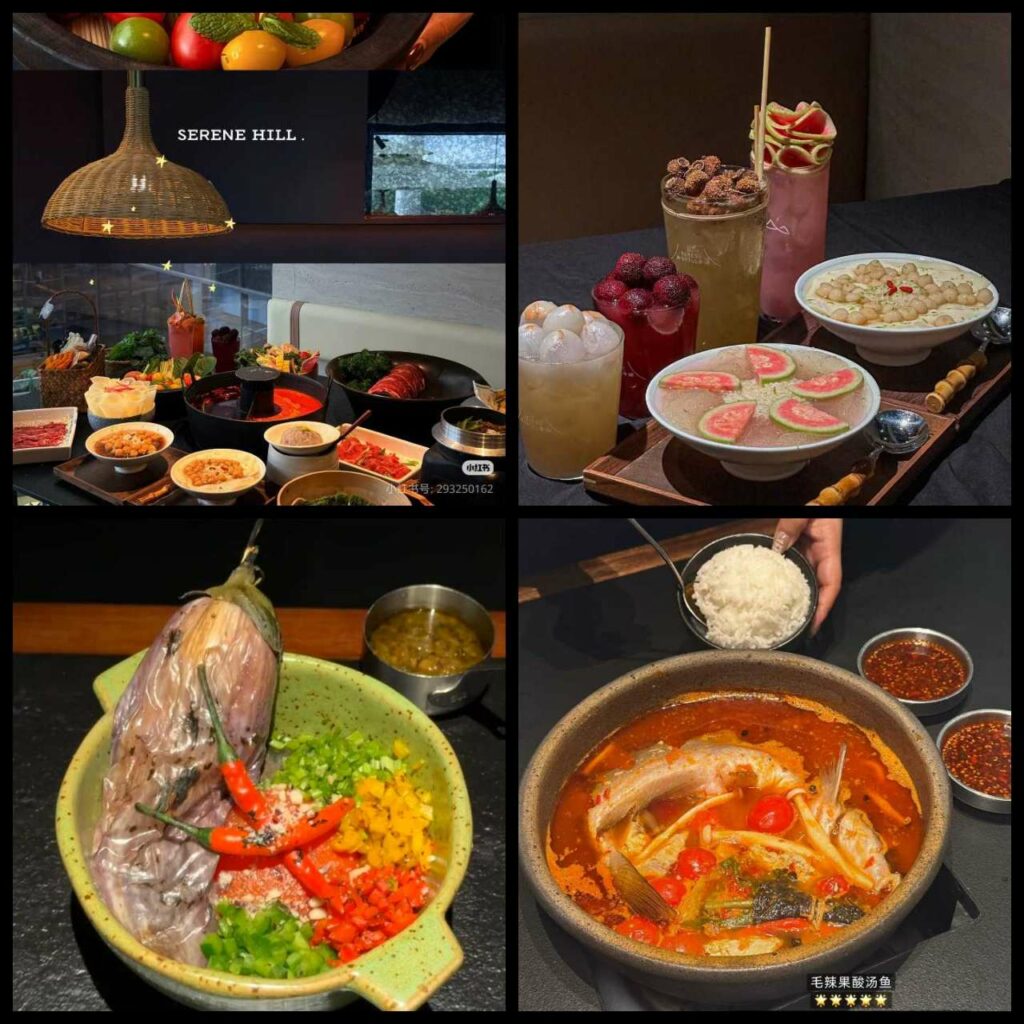
This is not a discounted Michelin. It is a reinvented Michelin : for a different audience, with a different trade-off, with its own codes, its own KPI (the Xiaohongshu post), its own success grid.
The market was validated in less than two years. Ameigo and Shan HuangHuang each have over 100 restaurants. NEED Korean Cuisine has over 70. The Boots has over 40. 胡恰 Hu Jia has over 30. COMMUNE operates 112 locations with over 1 billion RMB in annual revenue (approximately €128 million ), with 327 orders per day per location compared to 100 for a traditional restaurant. In the first half of 2025 , new Piaoliang openings surged by 230% .
A category of catering that was invented, proven, and industrialized.
Join the 1% who decipher China’s true operating manual.
Subscribe for free to receive sharp, unfiltered weekly intelligence and secure your exclusive “Digital Survival in China” briefing guide.
Part 2: The Viral Engine: Staging, Queueing, and the Manufacturing of Desire
The staging: the plate as a photo studio. Every detail is calibrated for visual impact. Warm lighting, matte ceramic tableware, carefully considered color contrast, a signature dish designed for the photo before it's designed for the palate. None of these stagings are gastronomic in the technical sense. All are conceived as a set design for social media.
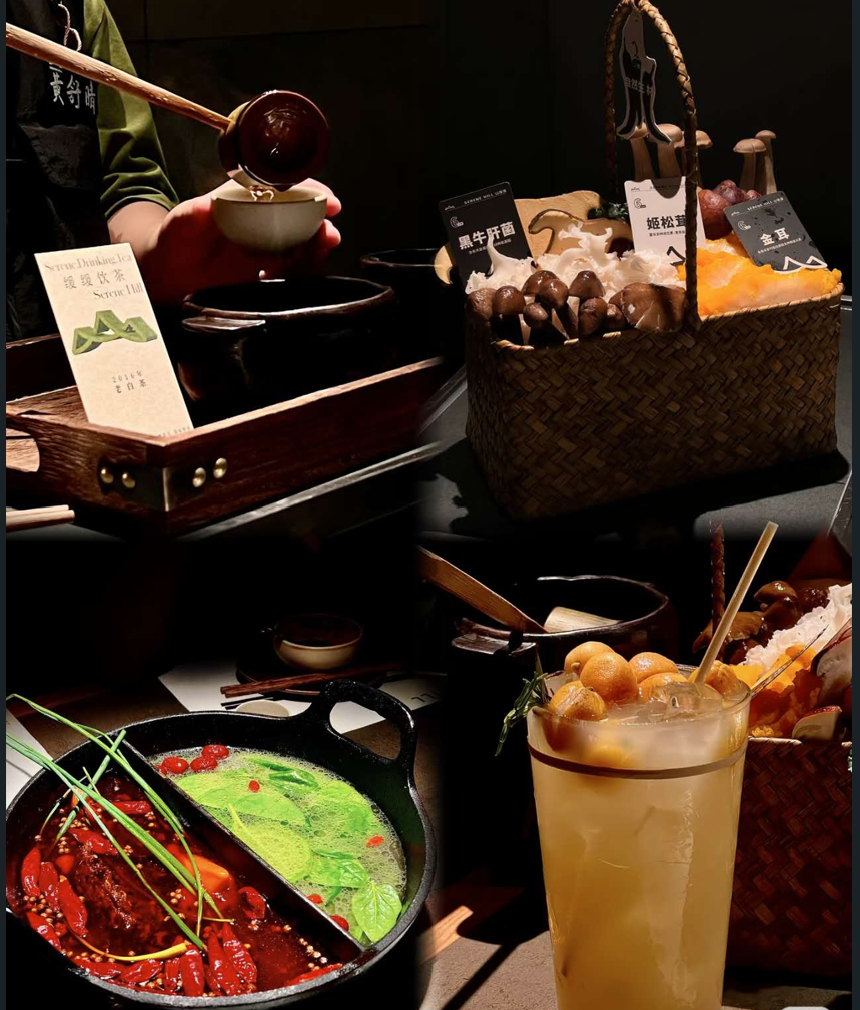
Customers no longer come to dine; they walk onto a set. The server no longer brings a dish; they cue a visual. The ritual of "手机先吃" ("phone eats first") is now a shared code: you take a picture before you touch. According to the Piaoliang restaurant chains, more than 90% of Gen Z customers take a photo before their first bite . This is no longer a fringe behavior. It's the default mode of operation.
The queue: from bottleneck to amplifier. Type "Piaoliang Fan queue" into any search engine. Videos show queues of three hours in Wuhan, ten hours in Shanghai for the most crowded chains. A parallel market for reselling tickets has sprung up, with prices observed as high as 300 RMB (€40) for the mere privilege of waiting.
This scarcity is intentional, not endured. The queue itself becomes content: photographed, shared, commented on. The longer the queue, the more it circulates. The more it circulates, the larger it grows. The queue is not an obstacle to success, it is the instrument of success. It's FOMO ( Fear of Missing Out ) industrialized.
The viral loop: algorithm, desire, mimicry. The Xiaohongshu/Douyin ecosystem amplifies everything. A viral post generates 10,000 imitations within a week. The Xiaohongshu algorithm, designed for visual discovery, pushes "pretty food" content toward the 18-30 age group with surgical precision. A restaurant that didn't exist the previous month can generate 50,000 mentions in three weeks . Several brands (NEED, COMMUNE) triggered their openings with a viral pre-launch campaign : 200 micro-influencers invited for a preview, generating 5,000 posts in 72 hours, and a guaranteed queue from day one.
Michelin also produces scarcity, but of a different kind: exclusive, planned, discreet, requiring reservations months in advance. Piaoliang Fan's scarcity is inclusive, instantaneous, viral, democratized by photography. Two regimes of scarcity, two radically different commercial strategies.
The operational consequences are brutal.
On the positive side: some "small Piaoliang meals" reach 15 table turnovers per day compared to 1.5 for a classic fine dining experience, a factor of 10. This is what makes industrialization profitable despite the moderate price.
On the downside: 65% of restaurant closures in China now involve "popular internet" brands, and the repeat visit rate is capped at less than 15%, compared to 35% for traditional restaurants. Customers come once, take photos, share them, and don't return. Today's queue could be tomorrow's closure.
Ask yourself the question: is your product over-invested in functional performance and under-invested in theatricality? In the majority of European brands operating in China, the answer is yes.
Part 3: The trade-off is successful and the business model is a win-win situation
51% extreme visual innovation + 49% standardized product quality = 100% Gen Z desirability.
Crucial point: quality remains at 100% (sourcing, hygiene, consistency, food safety). Non-negotiable. It is the taste value (the refinement of flavor, the chef's technique, the "wow" factor of each bite) that is adjusted to the acceptable threshold.
Not A5 Wagyu, but a decent sirloin steak. Not a broth simmered for eight hours, but a well-made industrial base. Not the technical perfection of a three-star chef, but the operational consistency of a chain with 100+ stores .
Why? Because the Gen Z consumer's brain allocates the majority of its pleasure capacity to photography and sharing. If the sauce is slightly less complex but the staging triggers a Xiaohongshu post, the emotional outcome is positive.
And what about profit margins? By charging 100-150 RMB per cover , these chains deliver the perception of "affordable fine dining" while relying on an industrial supply chain. The cost of ingredients is reduced. The experiential cost (design, tableware, ambiance) is spread across the volume. Profit per customer is higher than that of a traditional restaurant with a similar bill.
The elegance of this model also lies in its win-win-win business equation. Gen Z consumers get self-expression at an affordable price. The operator achieves higher profitability thanks to the industrialization of the supply chain: reduced material costs and experiential costs amortized over volume. The shopping center gains young foot traffic that it wouldn't otherwise be able to generate.
RECAP
| Dimension | Michelin | Piaoliang Fan |
|---|---|---|
| Supreme Law | Taste value + quality + experience combined in absolute excellence. | Experience/emotion prioritized, quality preserved, taste value adjusted. |
| Validation system | Descendant: printed guide, anonymous inspectors, closed committee. | Ascendant: Xiaohongshu, Douyin, peer validation. |
| Role of the consumer | Guest — he receives the expert's verdict. | Producer — he posts, he hashtags, he spreads. |
| Average ticket | €150 to €500+ per person |
100-150 RMB (€12-18) |
| Social Volume | Specialized press and food critics. | #漂亮饭: 7.31 billion views Douyin / 620M Xiaohongshu |
| Productivity | 1.5 table rotations / day. | 15 rotations / day FACTOR ×10 |
| Mindset | Deference to the expert, a private ritual. | Self-expression, horizontal validation. |
| Life cycle | Decades, sometimes centuries. | A few months — 65% of closures for "Internet brands". |
Part 4: The Economics of Emotional Value: From Pop Mart to Coach
仪式感 Ceremonialization as a driver of cross-sectoral growth
The heart of the phenomenon
Piaoliang Fan is not an isolated incident within the industry. It reflects a broader shift: Chinese Gen Z consumers are no longer paying for a product, but for a feeling, social validation, a moment worth posting. The decisive purchasing criterion is called "Xiaohongshu-able": the ability to generate a visually appealing post. This criterion now carries as much weight as price or quality.
The archetype: Pop Mart and Labubu
Pop Mart sells plastic figurines. They have no practical use. Yet: 6.1 billion RMB in revenue in 2023, a 36% increase , a net profit margin exceeding 20% , and a market capitalization surpassing 30 billion HKD . Its star license, Labubu, generates queues for its limited editions comparable to those of Piaoliang Fan.
The mechanics are identical: unboxing ceremony, display on Xiaohongshu-able shelves, exchanges between collectors, FOMO surrounding rare series. Pop Mart doesn't sell plastic. Pop Mart sells ritual.
The GuoFeng (Inspiration from Ancient China): Florasis, Perfect Diary
Chinese makeup has paved the way. Florasis and Perfect Diary don't beat Western giants in terms of pure product performance. But their packaging—engravings inspired by heritage, "love lock" lipsticks, and poetry-shaped boxes—justifies the price through storytelling. The logic is the same: photogenic appeal as a strategic driver, not just for show.
The emergence of expressive luxury: Coach
Western luxury has understood. Not all luxury, but a savvy segment.
Coach reinvented its image with "Coach Topia," featuring DIY campaigns, customization, and "daily chic" photography. In China, Coach collaborated with influencers Piaoliang to incorporate its bags into brunch photos. The result: a 55% increase in sales in China in Q1 2026 , driven by those under 30.
Expressive brands like Coach don't try to compete with Hermès on absolute rarity. They capitalize on social visibility. The same logic applies to the Piaoliang Fan, a higher-end segment.
The common rule. Pop Mart, Florasis, Coach, COMMUNE, NEED: five brands, four sectors, one single grammar.
If your product doesn't generate a photo, you're invisible to the influential urban Gen Z demographic. This transformation is no longer emerging; it's here to stay.
Part 5: Four actionable lessons for your brands
Lesson 1: Accept the trade-off, don't be a victim of it.
Don't try to be "Michelin-starred and viral." It's impossible. Create a sub-brand or capsule collection deliberately designed to be "Piaoliang-compatible." A concrete example: a French pastry shop can launch an ultra-colorful "cloud" dessert with a heart-shaped spoon, even if the pastry chef finds it kitschy. The market doesn't care. What the market wants is a striking image. Crucially , the quality of the product remains non-negotiable . The Piaoliang Fan adjusts the taste, not the quality.
Lesson 2: Measure the "photo triggerability" of your product.
Immediate audit: How many Xiaohongshu and Douyin posts does your brand generate per month in China? If the answer is less than 1,000 , you're invisible to urban Gen Z. The traditional KPI is obsolete. The relevant KPI is the ratio of UGC posts per 1,000 transactions .
Lesson 3: Reallocate your product budget towards theatrical elements.
If you operate in China and more than 50% of your marketing budget goes to paid media buying, you're funding the wrong channel. The rule of thumb: >66% on experience design (packaging, presentation, point of sale), <33% or even less on paid media. Loewe and Coach didn't explode in Asia thanks to TV. They exploded thanks to products designed to be photographed.
Lesson 4: Anticipate the risk of end of cycle.
The second visit rate of less than 15% for popular online brands, compared to 35% for traditional ones, is a warning sign. The 65% closure rate among these brands is even more telling.
For you: viral success is not sustainable success. If you launch a "Xiaohongshu-able" campaign, immediately plan phase 2, which is converting it into a long-term customer relationship. Without this second leg, you'll be among the 65% that shut their doors .
Final Word
China has revered the elders for 2500 years. This includes filial piety, respect for elders, and deference to experience. In this respect, Michelin is perfectly compatible.
A silent shift is underway. Chinese Gen Z has coined two words that circulate widely on Xiaohongshu and Douyin: 中登 (zhōng dēng) and 老登 (lǎo dēng) . These are pejorative labels for those in their forties and fifties, perceived as outdated, paternalistic, and culturally irrelevant. For the first time, it's no longer the young who have to prove their worth to their elders. It's the elders, and the brands associated with them, who have to prove they haven't fallen behind.
The 老登 label is unforgiving. Once affixed, it erases access for an entire generation.
Demographic paradox: China is aging (median age 39 in 2024 , 50+ in 2050 ). But nobody wants to be old. Forty-somethings consume like thirty-somethings, thirty-somethings like Gen Z. Society is aging. The Chinese refuse to be old.
The challenge for your brands can be summed up in one sentence: avoid being categorized as "老登", or lose the growth cohort . A design that's too conservative, a narrative that's too institutional, a spokesperson who's too conformist: these are all signals that will trap you in this category. Piaoliang Fan, Pop Mart, Florasis, and Coach have all understood the same thing: emotional value, shareable aesthetics, and a photographic ritual are the anti-老登 codes. They signal one thing: I am still in the game.
The real strategic question has changed. It's no longer: how many stars can I get? It has become: how do I avoid being labeled 老登 by the next consumer cohort?
Working on a case where an expert perspective would be of value?